Webinar on Climate Adaptation Tools: Leveraging Adaptation Tools for Enhanced Climate Resilience and Adaptation
Updated: Feb 19
12 February 2026 | Webinar
The Regional Resource Centre for Asia and the Pacific at the Asian Institute of Technology (AIT RRC.AP) successfully hosted a webinar titled “Leveraging Adaptation Tools for Enhanced Climate Resilience and Adaptation” on 12 February 2026. This online event was organised with financial support from the Ministry of Environment, Japan (MoEJ) and in collaboration with HITACHI, Japan.
The webinar attracted approximately 350 participants from nearly 60 countries worldwide, indicating strong regional and international interest in practical climate adaptation tools. The session aimed to strengthen applied understanding of climate risk and adaptation through live demonstrations of four complementary digital tools.
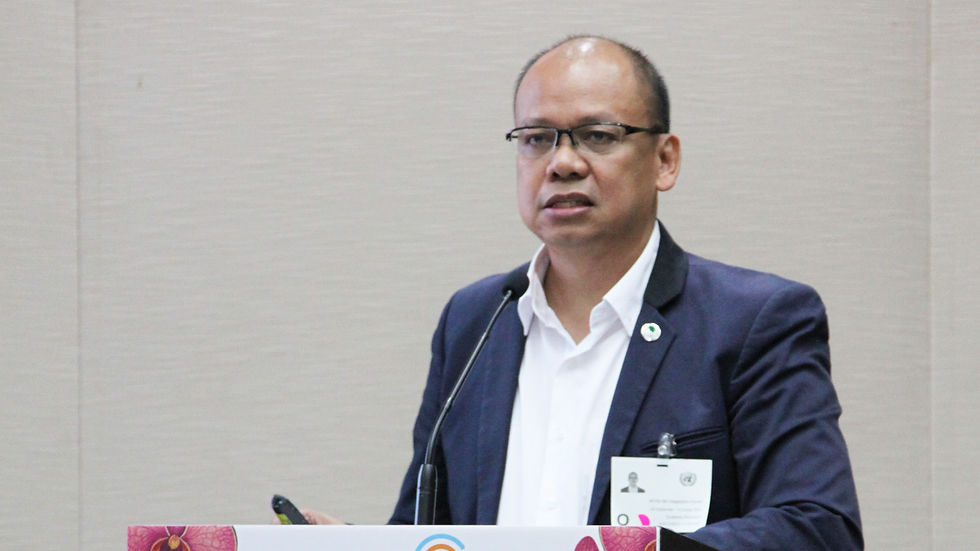
The session began with a welcome from Mr. Huno Solomon Kofi Mensah, Head of the Climate Change Cluster at AIT RRC.AP, followed by the opening remarks of Dr. Guilberto Borongan, Director of AIT RRC.AP, who emphasised the increasing frequency and severity of climate risks across the region and highlighted the importance of strengthening the capacity of institutions to turn climate information into practical action.
Mr. Taiki Kohno, Assistant Director of the Climate Change Adaptation Office, Global Environment Bureau, Ministry of the Environment, Japan (MoEJ), delivered his welcome remarks, emphasising the urgency of bridging the gap between climate data and decision-making, particularly in the face of increasing climate-related threats.
The context-setting session outlined key climate risks affecting the Asia-Pacific region and highlighted the crucial role of digital tools in supporting adaptation planning and operational decision-making. A core component of the webinar was the live demonstration of four complementary digital tools: FloodS, which supports local-scale flood hazard and inundation analysis, enabling rainfall-to-flood mapping and visualization of potential impacts; ClimoCast, which provides climate projections and scenario-based analysis for long-term planning; DioVista, which offers high-resolution data for detailed flood risk mapping and vulnerability assessment; and the Japan Adaptation Monitoring and Evaluation System (JAMES), which supports monitoring, evaluation, and learning (MEL) to track adaptation actions, outcomes, and progress over time. The webinar also included a practical case study from the Municipality of Matag-ob, Leyte, Philippines, demonstrating how climate projections and flood scenarios informed local planning and early-warning decisions.
Participants actively engaged in discussions, raising questions on data interpretation, tool application, and how to incorporate these into national and subnational planning processes. The interactive session provided valuable insights into the challenges and opportunities of utilizing climate information to inform planning, operations and decision-making.
The session concluded with a feedback survey to gather participants’ feedback and recommendations for further improvements, followed by a vote of thanks from Mr. Solomon, who expressed his sincere appreciation for the participants’ active engagement.
Reflection
“The webinar was highly relevant to my professional work in hydrology and flood risk management. The tools and approaches presented are practical and applicable, particularly for supporting climate adaptation planning and decision-making processes.”
-Bolorjargal.G, Information and Research Institute of Meteorology, Hydrology and Environment, Mongolia
“The webinar was highly informative and well-structured. The practical examples and tool demonstrations were particularly valuable. Thank you to the organizers and speakers for a very insightful session.”
-Yeliz TEKER, Disaster and Emergency Management Presidency (AFAD), Türkiye
“The seminar was highly informative and helped both professionals and students gain a deeper understanding of the topics.”
-Maxene Sagibal, Benguet State University, Philippines
“The webinar program packed multiple contents together, making it highly efficient. Particularly noteworthy was the significant time allocated to the live demonstration, which was excellent.”
-SUGAYA Kiminari, Weathernews Inc., Japan